

Introduction
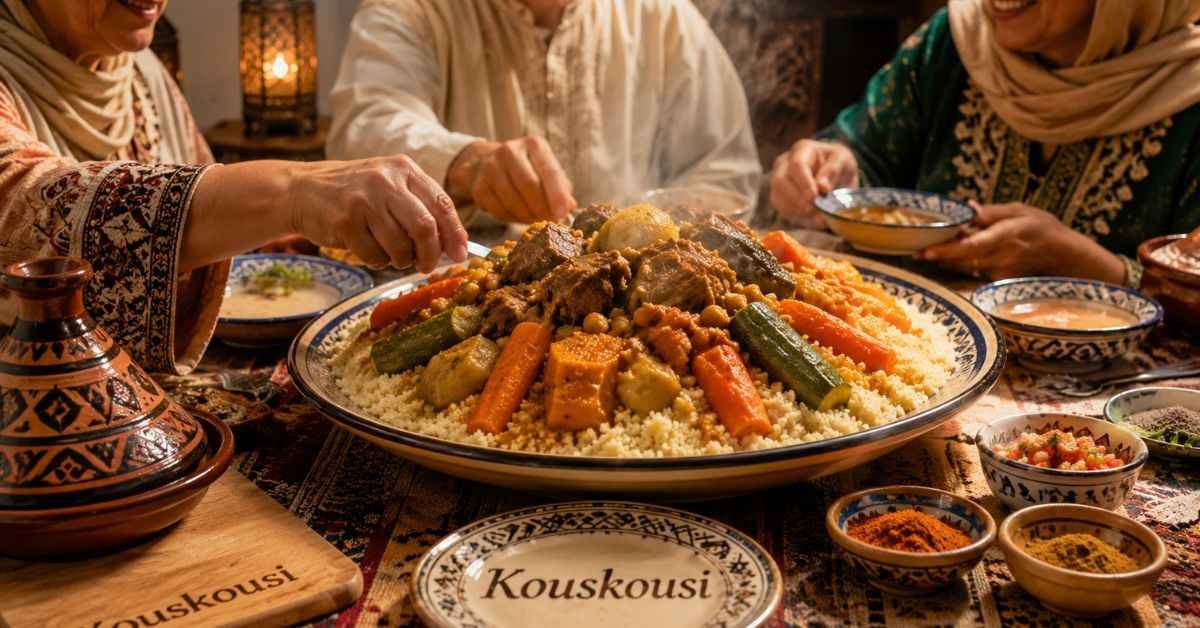
Kouskousi, widely known as couscous, is far more than a simple grain dish, it is the heart of North African culinary identity. Made from small, steamed granules of rolled durum wheat semolina, it has nourished families across Morocco, Algeria, Tunisia, Libya, and Mauritania for centuries. Traditionally served with slow-cooked stews, seasonal vegetables, tender meats, or even in sweet variations, it represents comfort, hospitality, and heritage.
In today’s world of fast food and fusion cuisine, it stands as a symbol of wholesome, communal eating. Recognized by UNESCO as an Intangible Cultural Heritage of Humanity in 2020, this traditional dish continues to bridge generations and cultures.
In this comprehensive guide, you’ll discover Kouskousi’s rich history, authentic preparation methods, nutritional benefits, regional variations, and practical cooking tips. Whether you’re a home cook, food enthusiast, or cultural explorer, this article will provide everything you need to understand and enjoy Kouskousi authentically.
The Origins and History of Kouskousi
Kouskousi traces its roots back over a thousand years to the Berber (Amazigh) communities of North Africa. Archaeological findings suggest that early forms of couscous were prepared as early as the 9th century.
Key Historical Insights
- Berber Heritage: Originated among indigenous Amazigh people.
- Medieval References: Documented in 13th-century North African cookbooks.
- Trade Influence: Spread through trade routes into the Middle East and Mediterranean.
- Colonial Era Spread: Introduced to Europe during French colonization.
It evolved as a practical staple durum wheat semolina was abundant, affordable, and easy to preserve. The steaming method ensured fluffy, separate grains rather than sticky clumps.
Historically, it symbolized unity. Families gathered around a large communal plate, eating together with hands or spoons. Friday couscous remains a cherished tradition in many Maghreb households.
Today, it reflects both resilience and adaptation. From rural clay pots to modern kitchens, its preparation has transformed but its cultural essence remains intact.
What Exactly Is Kouskousi?
At its core, it is made from durum wheat semolina rolled into tiny granules and steamed repeatedly for lightness and texture.
Core Characteristics
- Base Ingredient: Durum wheat semolina
- Texture: Light, fluffy, slightly chewy
- Cooking Method: Traditionally steamed in a couscoussier
- Flavor Profile: Mild, slightly nutty
Unlike pasta, it is not boiled. Instead, it undergoes a layered steaming process over a stew, allowing it to absorb aromatic flavors.
Couscous vs. Other Grains
| Feature | Kouskousi (Couscous) | Bulgur | Quinoa |
| Main Ingredient | Durum wheat semolina | Cracked wheat | Pseudograin |
| Cooking Method | Steamed | Boiled/soaked | Boiled |
| Texture | Fluffy, light | Chewy | Slight crunch |
| Cultural Origin | North Africa | Middle East | South America |
Understanding these differences helps appreciate why Kouskousi holds a unique place in traditional cuisine.
Traditional Preparation Method
Authentic Kouskousi preparation is both art and ritual. The key tool is the couscoussier, a two-tiered pot where stew simmers below and semolina steams above.
Traditional Preparation Steps
- Moisten semolina with salted water.
- Roll grains by hand to prevent clumping.
- Steam for 15–20 minutes.
- Remove, fluff, and re-moisten.
- Steam again (usually three rounds total).
This repeated steaming process creates the signature airy texture.
Why Steaming Matters
- Preserves nutrients.
- Enhances flavor absorption.
- Maintains grain integrity.
Modern instant couscous simplifies this process, but traditionalists argue it lacks depth in flavor and texture.
For authentic results:
- Use high-quality durum semolina.
- Avoid overwatering.
- Fluff gently between steaming rounds.
Mastering this technique elevates from simple grain to culinary masterpiece.
Regional Variations Across the Maghreb
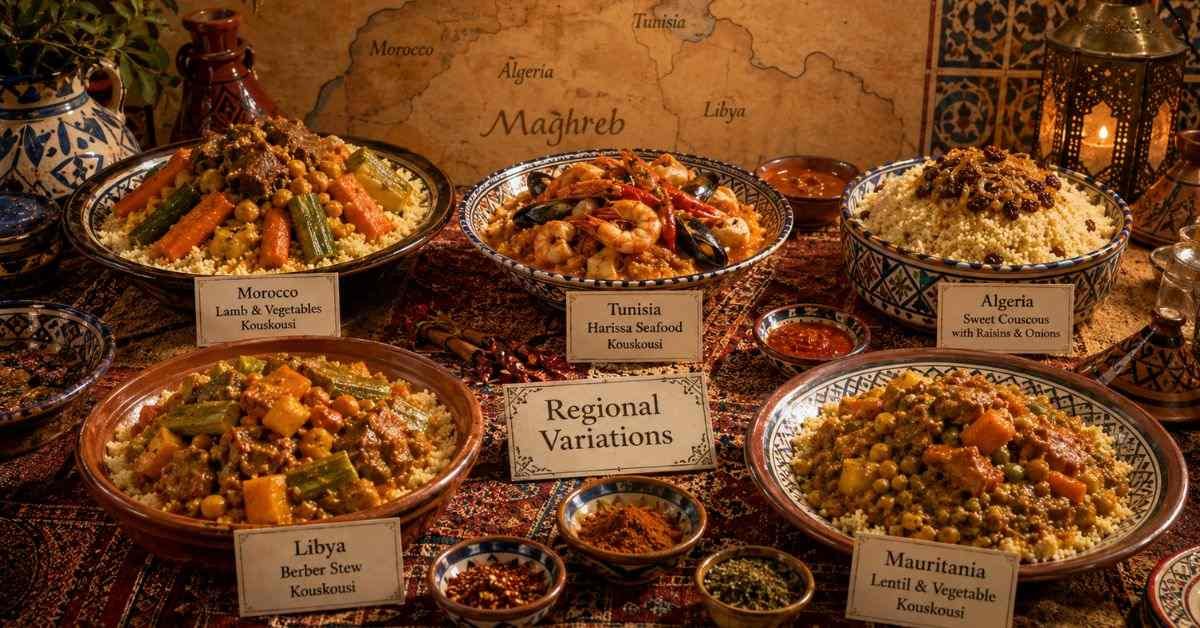
Every North African country has its own interpretation of Kouskousi.
Morocco
- Often includes lamb, carrots, zucchini, chickpeas.
- Popular Friday dish.
- A sweet version called Seffa.
Algeria
- Known for regional diversity.
- May include raisins and caramelized onions.
Tunisia
- Spicier due to harissa.
- Frequently paired with seafood.
Libya & Mauritania
- Simpler versions with camel or mutton.
- Focus on hearty stews.
These variations showcase how it adapts to local ingredients and climate.
Nutritional Value and Health Benefits
Kouskousi is nutritious and energy-dense.
Nutritional Highlights (Per 1 Cup Cooked)
| Nutrient | Amount |
| Calories | 176 |
| Protein | 6g |
| Fiber | 2g |
| Carbohydrates | 36g |
| Fat | <1g |
Health Benefits
- Provides sustained energy.
- Low in fat.
- Source of plant-based protein.
- Can be whole wheat for extra fiber.
Pairing Kouskousi with vegetables and legumes enhances its nutritional profile, making it a balanced meal.
Sweet vs. Savory Kouskousi
Kouskousi isn’t only savory.
Savory Versions
- Lamb and vegetable stew
- Chicken with preserved lemon
- Spiced fish couscous
Sweet Variations
- Steamed couscous with cinnamon and sugar
- Raisins, almonds, and milk
- Butter and powdered sugar (Seffa)
Sweet versions are often served at celebrations and family gatherings.
Cultural and Social Significance
Kouskousi is a deeply symbolic traditional dish in North Africa, representing unity, hospitality, and family connection. In countries across the Maghreb, it is commonly prepared for Friday family meals after prayers and served during important occasions such as weddings, religious festivals, and community gatherings. Traditionally eaten from a shared plate, it encourages togetherness and reflects strong cultural values of equality and generosity.
The preparation of Kouskousi is often passed down through generations, preserving culinary knowledge and reinforcing family bonds. In 2020, UNESCO recognized Kouskousi as an Intangible Cultural Heritage of Humanity, acknowledging its cultural, historical, and social importance. Even in modern times, it remains a powerful symbol of identity and tradition in North African society.
Modern Adaptations and Global Popularity
Today, Kouskousi is global.
Modern Uses
- Vegan couscous bowls
- Mediterranean salads
- Fusion dishes
Chefs worldwide incorporate couscous into contemporary cuisine while respecting its roots. Its versatility and quick cooking make it ideal for busy lifestyles.
How to Cook Perfect Kouskousi at Home
It can be prepared using either the traditional steaming method or a quick modern approach. Traditionally, semolina is moistened, rolled, and steamed multiple times in a couscoussier to achieve a light and fluffy texture that absorbs the flavors of the stew beneath it. This method provides the most authentic taste and texture.
For a faster option, instant couscous can be prepared by adding boiling water or broth, covering it for a few minutes, and fluffing it with a fork. While convenient, it may not fully match the texture of traditionally steamed Kouskousi. Using seasoned broth, proper moisture control, and gentle fluffing ensures the best results in both methods.
Buying, Storing, and Choosing Quality Kouskousi
When purchasing:
- Look for 100% durum wheat semolina.
- Choose whole wheat for extra nutrition.
- Check for fine, medium, or coarse grain size.
Storage Tips
- Keep in an airtight container.
- Store in a cool, dry place.
- Shelf life: 6–12 months.
Quality couscous ensures better texture and flavor.
FAQs
Is Kouskousi gluten-free?
No, traditional Kouskousi contains wheat and gluten. Gluten-free alternatives use corn or millet.
What is the difference between Moroccan and Israeli couscous?
Moroccan couscous is fine and steamed; Israeli couscous (pearl couscous) is larger and toasted.
Can Kouskousi be made vegan?
Yes. Replace meat with chickpeas, lentils, and vegetables.
Why is traditional steaming important?
Steaming ensures light texture and better flavor absorption.
How is Kouskousi traditionally served?
On a large communal plate, topped with stew and shared among family.
Conclusion
Kouskousi is a living cultural treasure, not just a traditional cuisine from North Africa. From its Amazigh origins to its UNESCO recognition, this humble steamed semolina has nourished generations and united communities. Its versatility allows it to be savory or sweet, traditional or modern, simple or celebratory.
By understanding its history, preparation methods, and cultural significance, you gain a deeper appreciation for its enduring relevance. It provides warmth, food, and connection whether you make it quickly on a weekday or cook it traditionally with a couscoussier.
If you’re passionate about traditional dishes, consider exploring other Maghreb classics or experimenting with regional variations of Kouskousi.