

Introduction
The term cronut meaning has become increasingly popular in modern food culture, especially among pastry lovers and culinary trend followers. But what exactly is a Cronut, and why did it become such a global phenomenon?
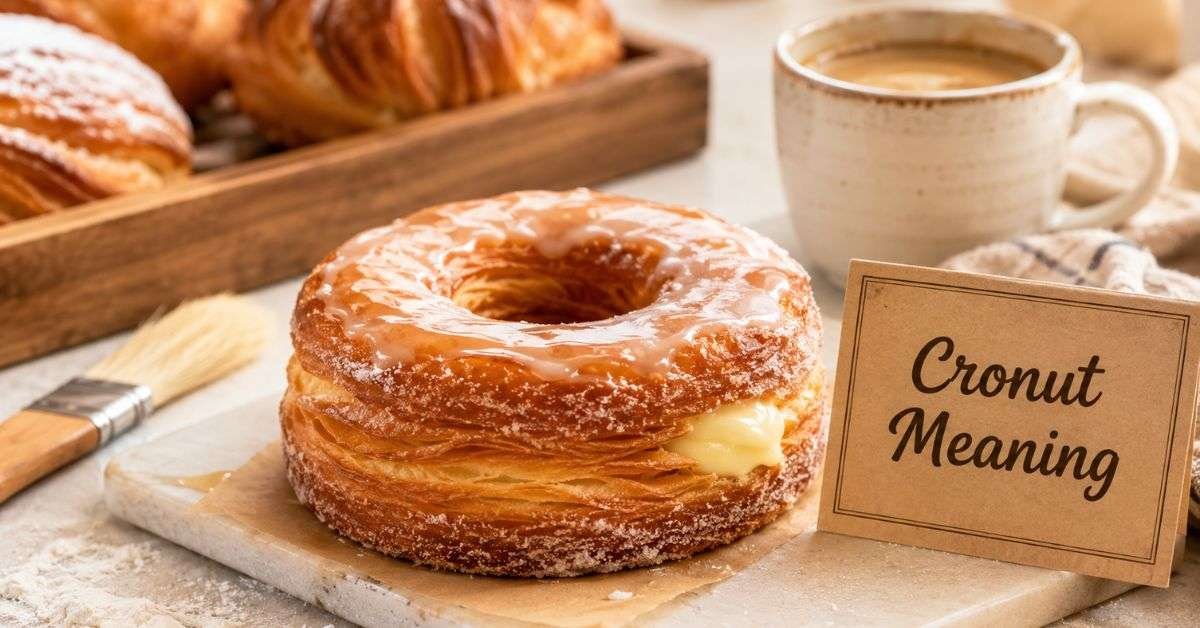
A Cronut is a popular pastry hybrid that is a cross between a croissant and a doughnut. It combines the buttery, flaky layers of a croissant with the round shape and deep-fried texture of a doughnut. The result is a crispy, caramelized exterior with delicate, airy layers inside often filled with flavored cream and finished with glaze or sugar.
Since its debut in 2013, the cronut meaning has transformed from a bakery experiment into a worldwide dessert icon. In this in-depth guide, you’ll discover the true cronut meaning, its origin, how it’s made, how it differs from similar pastries, and why it continues to influence global baking trends. Whether you’re a curious foodie or someone researching dessert culture, this article provides a complete and valuable overview.
What Is the Cronut Meaning? Definition and Concept
Understanding the Cronut meaning begins with the word itself. “Cronut” is a blend of two words: croissant and doughnut. However, it’s far more than a simple mashup name. It represents a carefully developed pastry that merges French baking techniques with American dessert indulgence.
Unlike a traditional doughnut made from enriched dough, the Cronut uses laminated dough the same type used for croissants. Laminated dough is created by folding butter into dough multiple times, forming thin layers that expand beautifully during cooking.
Characteristics of a Cronut include
- Laminated croissant-style dough
- Deep-frying instead of baking
- Round doughnut shape with a center hole
- Cream filling inside
- Sugar coating or flavored glaze
The texture is what truly defines it. The outside is crisp and golden, while the inside reveals delicate honeycomb-like layers. This structural complexity is central to the real cronut meaning.
In simple terms, the cronut meaning is not just a hybrid pastry, it’s a refined culinary innovation that bridges classic European technique with modern dessert creativity.
The Origin of the Cronut: Who Invented It?
The cronut meaning became globally recognized in May 2013, when French pastry chef Dominique Ansel introduced it at his New York City bakery, Dominique Ansel Bakery.
After months of testing recipes, adjusting lamination techniques, and refining frying temperatures, Ansel launched the cronut meaning in limited quantities. The reaction was immediate and overwhelming. Customers began lining up early in the morning, sometimes waiting hours just to purchase one.
The cronut meaning was officially trademarked, which prevented other bakeries from using the exact name. This exclusivity added to its appeal. Several factors contributed to its viral success:
- Social media exposure, especially on Instagram
- Coverage by major media outlets like The New York Times
- Limited daily production
- Rotating monthly flavors
Within weeks, the cronut’s meaning became a global food trend. Bakeries around the world attempted to recreate similar pastries, though they often had to use different names due to trademark protection.
The invention of the cronut meaning represents more than a dessert trend, it symbolizes innovation in modern pastry arts.
How a Cronut Is Made: Step-by-Step Process
To fully understand the cronut meaning, it helps to examine how it’s made. The process is complex and typically takes two to three days.
It begins with preparing enriched dough similar to croissant dough. Butter is carefully layered into the dough through a process called lamination. This involves rolling and folding the dough multiple times to create dozens of thin layers.
After lamination, the dough is:
- Cut into round doughnut shapes
- Allowed to proof (rise)
- Deep-fried at a precise temperature
- Filled with flavored pastry cream
- Rolled in sugar or topped with glaze
The frying process is particularly important. Unlike croissants, which are baked, Cronuts are fried at controlled temperatures to achieve a crisp outer shell without compromising the delicate internal layers.
Precision matters at every stage. Temperature control, butter quality, and resting time all influence the final texture. This craftsmanship is what separates an authentic cronut meaning from simpler imitations.
Cronut vs Croissant vs Doughnut: What’s the Difference?
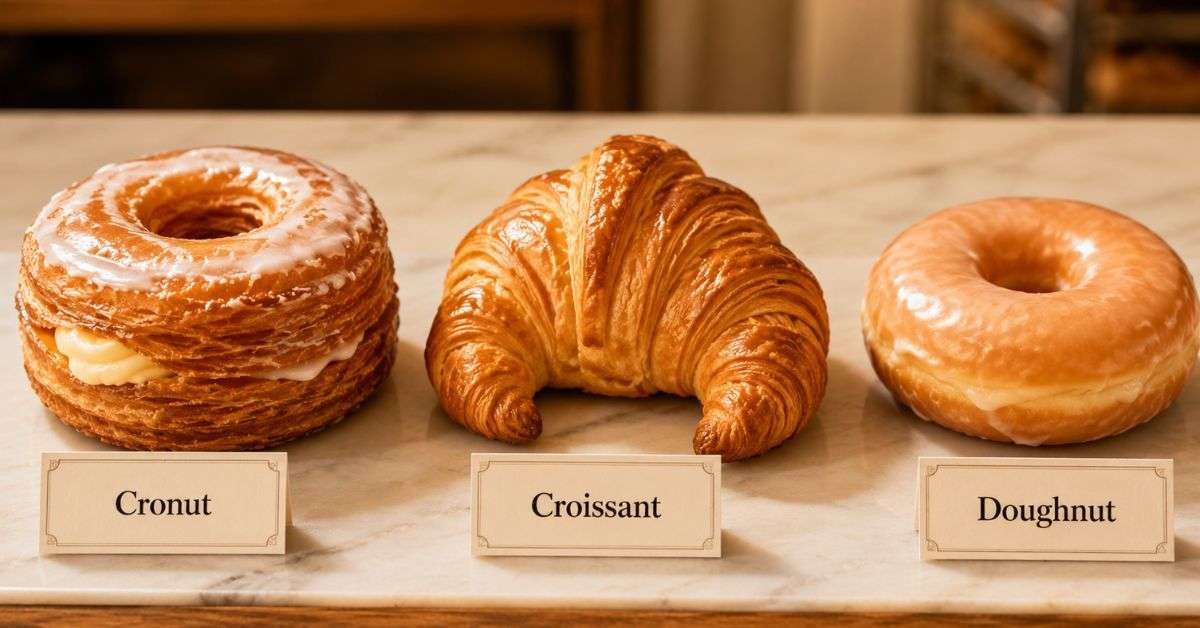
Many people confuse these pastries, but there are clear differences in preparation, texture, and taste.
| Feature | Cronut | Croissant | Doughnut |
| Cooking Method | Fried | Baked | Fried |
| Dough Type | Laminated | Laminated | Enriched |
| Texture | Flaky & Crispy | Flaky & Soft | Soft & Dense |
| Filling | Cream-filled | Usually plain | Optional |
| Shape | Round with hole | Crescent | Round |
The key distinction lies in cooking technique. Croissants are baked, preserving a soft, flaky texture. Doughnuts are fried but made from a simpler dough. The Cronut uniquely combines laminated dough with frying.
This comparison helps clarify the cronut meaning and why it occupies a distinct place in pastry culture.
Why Did the Cronut Become So Popular?
The Cronut emerged at a time when food culture was rapidly evolving online. Social media platforms amplified visually appealing foods, and the Cronut’s layered interior made it highly photogenic.
Its popularity was fueled by several psychological and cultural factors:
- Exclusivity due to limited daily production
- Long lines creating perceived value
- Media coverage and celebrity endorsements
- Monthly rotating flavors that encouraged repeat visits
In 2013, customers reportedly lined up as early as 4 a.m. in New York City. Some even attempted to resell Cronuts at inflated prices.
The Cronut’s success demonstrates how innovation, scarcity, and digital sharing can transform a single product into a global brand phenomenon.
Flavors and Global Variations
Another essential part of the cronut meaning is its adaptability. While the original featured rotating monthly flavors, bakeries worldwide have created their own interpretations.
Popular flavors include vanilla bean, salted caramel, chocolate ganache, raspberry, and matcha green tea. Seasonal variations often reflect local tastes and ingredients.
International adaptations include
- Matcha-infused versions in Japan
- Pistachio and rose flavors in the Middle East
- Premium butter-based variations in France
Some bakeries have even experimented with savory versions or vegan alternatives. This flexibility has helped the cronut meaning remain relevant long after its initial viral success.
Nutritional Information: Is a Cronut Healthy?
While delicious, Cronuts are indulgent treats rather than everyday snacks.
On average, one Cronut contains approximately:
| Nutrient | Estimated Amount |
| Calories | 400–500 kcal |
| Fat | 25–30g |
| Sugar | 20–30g |
| Carbohydrates | 40–50g |
Due to its butter content and frying method, it is relatively high in calories and fat. However, when enjoyed occasionally as part of a balanced diet, it can be a satisfying dessert experience.
Understanding its nutritional profile provides a realistic perspective on the cronut meaning, it’s a luxury pastry designed for indulgence.
Can You Make a Cronut at Home?
Making a cronut at home is possible but requires patience and precision. Because laminated dough is sensitive to temperature, maintaining cool conditions during preparation is crucial.
Home bakers should focus on
- Using high-quality butter
- Allowing sufficient resting time between folds
- Monitoring frying temperature carefully
- Avoiding overhandling the dough
While homemade versions may not perfectly replicate the original, they can still capture the layered texture and rich flavor that define the Cronut.
The Cronut’s Influence on Modern Dessert Trends
The cronut meaning now extends beyond a single pastry. It sparked a broader trend of hybrid desserts that combine familiar favorites into something new.
Examples of similar mashups include
- Cruffin (croissant + muffin)
- Duffin (doughnut + muffin)
- Brookie (brownie + cookie)
The Cronut demonstrated that consumers are drawn to novelty combined with recognizable flavors. It inspired pastry chefs worldwide to experiment with creative combinations.
Business Lessons from the Cronut Phenomenon
From a marketing perspective, the Cronut is a powerful case study. Dominique Ansel’s approach combined craftsmanship with strategic branding.
Key business insights include controlled supply, trademark protection, and strategic media exposure. By limiting daily production, the bakery created urgency and demand.
The Cronut’s success led to global expansion for the brand and influenced how bakeries launch signature items today.
FAQs
What does “cronut” mean?
A Cronut meaning is a pastry hybrid made from croissant dough that is shaped and fried like a doughnut.
Who invented the Cronut?
Dominique Ansel created it in 2013 in New York City.
Is a Cronut baked or fried?
It is deep-fried, unlike a croissant, which is baked.
Why are Cronuts expensive?
They require complex preparation, premium ingredients, and significant labor.
Can you buy Cronuts outside the United States?
Yes, a lot of bakeries around the world sell similar treats to Dominique Ansel Bakery’s genuine, trademarked Cronuts.
Conclusion
The true cronut meaning goes far beyond its name. It represents innovation, craftsmanship, and the evolution of modern dessert culture. By combining the laminated elegance of a croissant with the indulgent frying method of a doughnut, the Cronut became one of the most iconic pastries of the 21st century.
From its origin in a New York bakery to its global adaptations, the Cronut has influenced both culinary trends and marketing strategies. Though indulgent, it remains a symbol of creativity in the baking world.