

Introduction
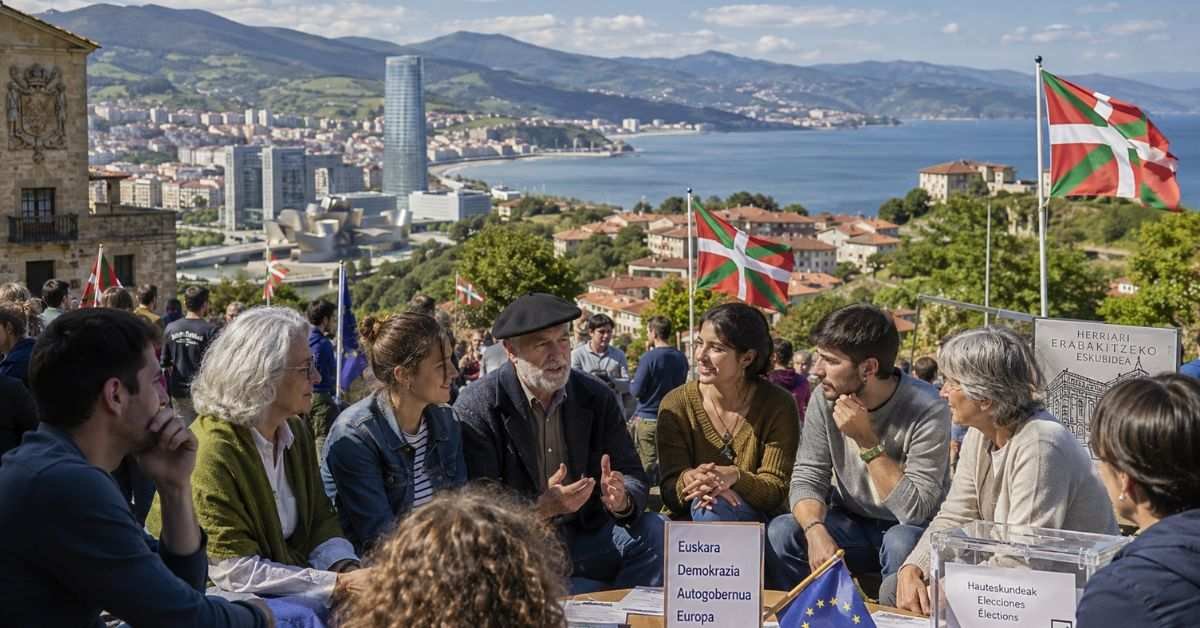
The term Basqueserpartists appears to be a nonstandard online spelling of “Basque separatists,” meaning people or organizations that support an independent Basque state. However, the label must be used carefully. Basque nationalism includes moderate autonomists, peaceful independence supporters, cultural campaigners, and, historically, the armed organization ETA. These groups do not share the same methods or political goals.
The subject still matters because the Basque Country has a strong language, distinct institutions, broad self-government, and influential nationalist parties. ETA ended its armed activity in 2011 and dissolved in 2018, so today’s debate takes place mainly through elections, parliamentary negotiation, civic action, and cultural policy. Spain’s Constitution recognizes regional autonomy while defining the Spanish nation as indivisible, creating the legal tension at the heart of the issue.
This guide explains the movement’s origins, culture, violence, democratic transition, current politics, and possible future without treating all Basque nationalists as extremists.
What Does Basqueserpartists Mean?
Basqueserpartists is not a standard academic or political term. It appears to point to Basque separatists or the wider independence movement. The following distinctions prevent confusion:
- Basque nationalism: Basques form a nation with shared political interests.
- Autonomism: Stronger self-government while remaining within Spain.
- Independence: Creation of a sovereign Basque state.
- ETA: A dissolved armed organization, not a synonym for every nationalist party or voter.
Basque politics is diverse, so describing the entire movement as one extremist group is inaccurate. Some people primarily support the Basque language and regional institutions, while others openly campaign for complete political independence.
Historical Origins of Basqueserpartists
Modern Basque nationalism grew from older local laws called fueros and concerns about centralization, industrial change, migration, and cultural loss. In the late nineteenth century, Sabino Arana developed a nationalist program and founded the Basque Nationalist Party, or PNV, in 1895. His early ideology included exclusionary racial and religious ideas that later Basque nationalism changed or rejected.
Important influences included
- Reduction of historic provincial privileges
- Industrialization around Bilbao
- Concern over the decline of Euskara
- Growth of European nationalism
The Basqueserpartists story therefore began long before ETA and cannot be explained only through modern violence. Its political development was also connected to debates about regional law, religion, language, economic change, and the relationship between Basque identity and the Spanish state.
Territory, Language and Cultural Identity
The cultural idea of Euskal Herria crosses the western Pyrenees and includes territories in Spain and France. Spain’s Basque Autonomous Community contains Álava, Biscay, and Gipuzkoa; Navarre has a separate autonomous system; and the northern territories are in France.
Euskara is central to identity and is linguistically different from the major Indo-European languages surrounding it. Its legal protection differs by territory. Spain recognizes it officially in the Basque Autonomous Community, while the Council of Europe monitors its use in education, justice, healthcare, administration, and media. For many Basqueserpartists, protecting culture matters as much as changing borders.
| Cultural-political area | Present arrangement | Main issue |
| Basque Autonomous Community | Self-governing Spanish community | Autonomy, language and taxation |
| Navarre | Separate Spanish chartered community | Mixed views on Basque identity |
| Northern Basque Country | Part of France | Recognition and language support |
Franco’s Dictatorship and the Rise of ETA
Francisco Franco’s dictatorship suppressed Basque political and cultural expression. ETA, meaning “Basque Homeland and Freedom,” was founded in 1959 by young nationalists who rejected Francoism and the older PNV leadership. It later adopted revolutionary and armed methods.
Its campaign involved bombings, shootings, kidnappings, threats, and extortion. Spain’s Interior Ministry attributes 853 deaths to ETA between 1968 and 2010. The violence devastated victims and families, intimidated public life, divided society, and weakened support for armed separatism.
Any discussion of Basqueserpartists must therefore recognize victims and avoid romanticizing political violence. Opposition to dictatorship may explain the environment in which ETA first appeared, but it does not justify the group’s later attacks during Spain’s democratic period.
Democracy, Autonomy and the Gernika Statute
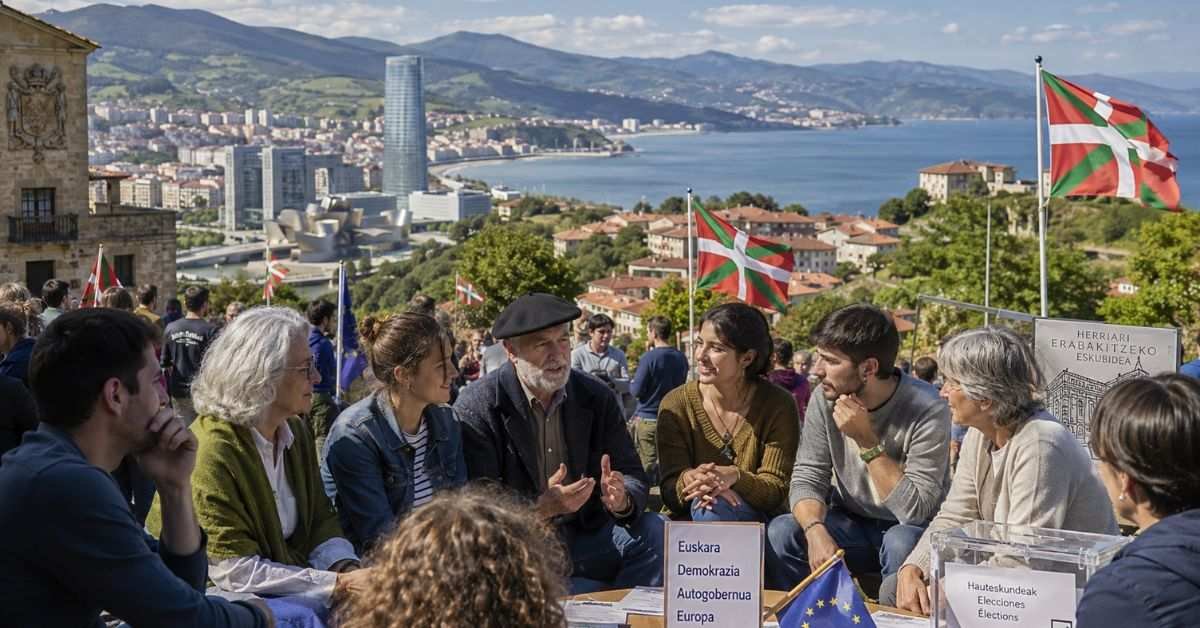 After Franco’s death, Spain moved toward democracy. The 1978 Constitution recognized regional autonomy but maintained Spain’s “indissoluble unity.” The 1979 Statute of Gernika created the modern system of Basque self-government.
Basque institutions received authority
- Education, language, and cultural policy
- Regional policing through the Ertzaintza
- Healthcare and public administration
- Transport and economic development
- Tax collection under a special fiscal system
This arrangement gave Basqueserpartists a democratic route for seeking greater powers, although independence supporters argue that autonomy does not provide full self-determination.
| Position | Main goal | Typical method |
| Spanish unionism | Remain within Spain | Constitutional politics |
| Enhanced autonomy | Expand devolved powers | Bilateral negotiation |
| Peaceful independence | Establish a Basque state | Elections and civic action |
| Historical armed separatism | Independence through coercion | ETA violence, now ended |
The End of ETA’s Armed Campaign
ETA’s ending occurred in stages rather than through one complete peace treaty. It announced the definitive end of armed activity in 2011, disclosed weapons locations during a civil-society-supported disarmament process in 2017, and dissolved its structures in 2018.
This transition changed discussion of Basqueserpartists. Elections, coalitions, prisoner policy, victims’ recognition, historical memory, and reconciliation replaced security emergencies as central issues.
Disagreement continues over how the violent period should be remembered. Victims’ organizations emphasize justice, accurate historical records, and rejection of attempts to excuse terrorism. Other groups focus on prisoner policy, reconciliation, and rebuilding relationships. The decisive point is that ETA is a disbanded organization, not an active armed movement.
Political Parties and Different Nationalist Paths
Basque nationalist politics is not a single bloc. The PNV generally follows a pragmatic path combining Basque nationhood, economic management, and negotiated self-government. EH Bildu represents the pro-independence left and has expanded through electoral politics. Other parties support federalism, Spanish unity, socialism, conservatism, or mixed identities.
The Basqueserpartists label can therefore be misleading. Someone may favor Euskara, recognition of Basque nationhood, and wider fiscal authority without seeking immediate separation. Another person may support independence but reject unilateral action.
There are also disagreements about economic policy, environmental protection, housing, healthcare, workers’ rights, relations with the European Union, and cooperation with Madrid. Basque political identity works more like a spectrum than a simple yes-or-no choice.
What Recent Elections Reveal
The April 2024 Basque parliamentary election produced a close balance. Official results gave the PNV and EH Bildu 27 seats each. The Socialists won 12, the People’s Party seven, and Sumar and Vox one each. The PNV continued governing with Socialist support, and Imanol Pradales became lehendakari.
The result demonstrated two important trends
- Nationalist parties remain central to Basque political life.
- Voters differ over ideology, independence, governing style, and relations with Madrid.
The combined strength of nationalist parties should not automatically be presented as majority support for immediate independence. For Basqueserpartists, electoral strength creates influence, yet constitutional change would still require broader public agreement, detailed planning, and negotiations with Spain.
Main Arguments For and Against Independence
Supporters say independence could provide full control over taxation, language policy, international representation, and social priorities. They also argue that statehood would formally recognize Basque national identity and allow local voters to make major decisions without approval from Madrid.
Opponents highlight
- Spain’s constitutional limits on unilateral secession
- Economic uncertainty during state formation
- EU membership and cross-border legal questions
- Political differences within Navarre and France
- Rights of Spanish, French, mixed, and non-nationalist residents
A responsible Basqueserpartists analysis should not assume that culture produces one political answer. Shared identity can support independence, autonomy, federalism, or continued union. Any future proposal would need to explain citizenship, borders, trade, public debt, pensions, security, and minority protections.
The Future of Basqueserpartists
The movement’s future will probably depend on democratic negotiation rather than confrontation. In March 2026, the Spanish and Basque governments announced agreements covering economic development, security, traffic, and infrastructure, showing that their relationship continues to evolve within the present state framework.
Likely priorities include
- Expanding or completing transfers of authority
- Strengthening Euskara in public and digital life
- Supporting victims, memory, and reconciliation
- Developing cross-border cultural cooperation
- Persuading mixed-identity and undecided voters
- Producing a lawful plan for any status change
For Basqueserpartists, durable progress requires consent, nonviolence, legal clarity, and respect for plural identities. A successful political project would need to offer practical benefits, not only emotional or historical arguments.
FAQs
Is Basqueserpartists the correct spelling?
It is not a recognized standard term. “Basque separatists,” “Basque nationalists,” or “Basque independence movement” is clearer, depending on the intended subject.
Do all Basque nationalists want independence?
No. Some support independence, while others prefer stronger autonomy, federal reform, cultural protection, or cooperation within Spain.
Is ETA still active?
No. ETA ended armed activity in 2011 and dissolved its organizational structures in 2018.
Is the Basque Country autonomous?
Yes. It has elected institutions and extensive devolved powers under Spain’s Constitution and the Statute of Gernika.
Could the Basque Country become independent?
It remains possible as a political goal but legally difficult. It would require broad democratic legitimacy, negotiations with Spain, and solutions to territorial, economic, constitutional, and European questions.
Conclusion
Basqueserpartists is best understood as a search term pointing toward the broader Basque independence question. Its history combines a distinctive language, traditions of self-rule, modern nationalism, dictatorship, democratic autonomy, ETA’s violence, and a major shift toward peaceful institutional politics. Treating every nationalist as an ETA supporter is inaccurate, just as ignoring ETA’s victims would be irresponsible.
Today’s debate is no longer mainly about armed conflict. It concerns how much self-government the Basque Country should possess, whether Basques form a nation entitled to statehood, how constitutional reform could occur, and how citizens with different identities can share political space.
Readers researching Basqueserpartists should compare official laws, election results, victims’ records, party programs, and independent scholarship instead of relying on slogans. The future will depend on democratic consent, realistic legal planning, cultural confidence, protection of minority viewpoints, and an enduring rejection of political violence.